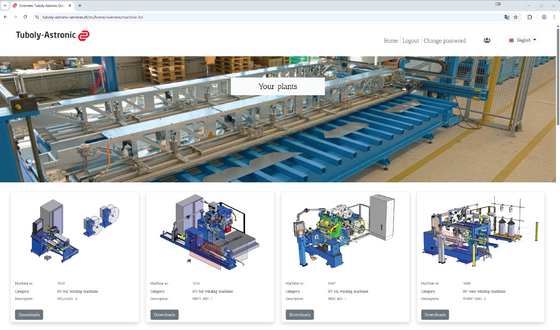
In future, operating instructions will need to be accessible online throughout the scheduled service life of the machine and for a period of at least ten years after it is placed on the market. To ensure that this is possible, many companies are going to need to adapt some of their processes, establish new cloud platforms or expand existing customer information systems. In the form of our standardised service portal, we offer a simple solution that can be customised to suit the needs of your company quickly and easily.
New areas covered
Of course, the new Machinery Regulation comes with a whole number of changes in terms of content and areas covered. For example, it will be a mandatory requirement that risk assessments also look at e.g. digital threats and cybersecurity risks. In addition, the list of machines that are classed as particularly at-risk and are therefore subject to more stringent test methods has been revised and expanded. Content relating to installation instructions for incomplete machines has also been defined in much more extensive detail – with just a few exceptions, the content now matches the requirements for complete machines.
Optimising authoring processes
When it comes to updating your operating instructions to get them ready for the new Machinery Regulation, it is worth remembering that this also provides you with an opportunity to scrutinise and optimise your existing processes. You will need to gather information from many different departments within your company:
The engineering/design department provides technical data, CAD models, assembly drawings and parts lists. The software department supplies raw information for the description of controllers. The marketing department defines the graphical layout and design and also provides inputs on internal wording to be used within the company. The electrical engineering department provides schematic drawings and details for the control panels. Customer service defines the scope of replacement parts and wear parts, and the order confirmation from the sales department also contains valuable information about the scope of supply as well as translations. It takes careful planning, structuring and organisation of the processes to ensure that all this information is collected at the right time. Every department needs to know what information it is required to make available, when it needs to be ready, and in what form. This is the only way to ensure that operating instructions can be completed on time before the machine is delivered to the customer.